

Breathe Easy, Sleep Soundly
SOMNIUM
Sep - Dec 2024
Rhino, Keyshot, Photoshop, Sketchbook
IHA Competition
DURATION
TOOLS
TYPE

What is CPAP?
Continuous Positive Airway Pressure (CPAP) is used to treat forms of sleep apnea which is where breathing stops during sleep.
OVER 1 MILLION
people worldwide use CPAP therapy to treat obstructive Sleep Apnea (OSA).
50% OF PATIENTS
stop CPAP treatment after just the first month.
Modern CPAPs fail, but not in function...
Visually medical. CPAP devices are often bulky and embarrassing to display.
No home for parts. There’s typically no way to store the mask or hose cleanly.
Sanitation plays a huge factor in design. Parts need to be easily replacable.


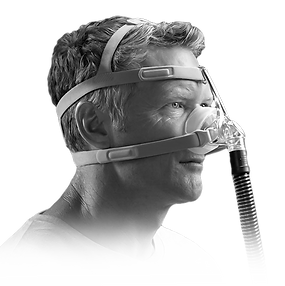

CPAP Nasal Mask
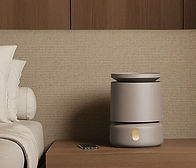
CPAP Unit
The nightly burden.
Somnium began by looking at the nightly cycle surrounding CPAP use, not just the machine itself. Conversations with sleep specialists helped clarify where adherence begins to break down. Small repeated friction points become reasons to avoid the system altogether.
That led to the question: how can CPAP therapy feel less clinical and easier to live with?


- Suffered from a deviated septum and years
of snoring, and would get horrible sleep.
- Losing such a huge aspect of your natural cycle takes
a greater toll on a person than one might think.
“There were some nights where I would only
get an hour of overall sleep...”
Jennifer - 55
Project Manager

- Specializes in sleep medicine, and has co-published multiple articles about OSA and its effects on the human body.
- Described steps for acquiring and maintaining
a CPAP machine for regular use.
CPAP machines must be prescribed
to patients diagnosed with OSA.
Dr. Kumar - 56
Sleep Specialist
The market and why it's not working.
CPAP machines on the market are bulky and take up a lot of space. When they don’t, they may sacrifice beneficial components.

I kept asking why CPAP machines still feel like hospital equipment, even though people use them every night at home.

How might we revolutionize CPAP therapy
through comfortable, user-centric design,
integrated seamlessly into the home?
Is there a way to make sleeping with this contraption more manageable?
Can the machine be taken off the nightstand to sacrifice less space?
Early development explored the two parts of the system users interact with most: the CPAP mask and the bedside unit.
The mask focused on softer contact points, slimmer hose routing, and ways to reduce the medical feeling of the face interface.
The unit, exploration of how the machine could move off
the nightstand, store the mask and hose intentionally,
and feel more apart its environment.
MASK

UNIT

Design Direction




Refining / Prototyping
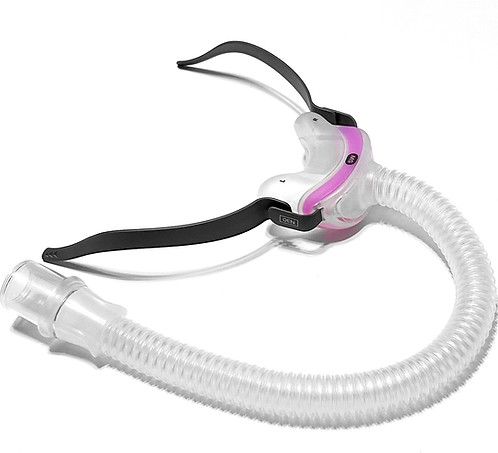
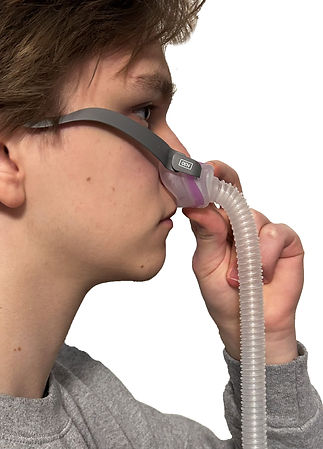
Prototyping helped test the scale, fit, and presence of the mask against the face.
The nasal mask was refined to feel softer and less intrusive, while the unit was simplified to support storage, readability, and a calmer bedside presence.


3D printed prototype with removable nose piece for sanitation.
What might change?
The Resmed Airsense 11 is one of the highest end CPAP machines, however you have to conform around the machine, not the other way around.

What if the CPAP integrates within its environment?


meet
SOMNIUM
A less-invasive CPAP mask and unit designed around comfort, discretion, and daily life in the home.
Sleep is precious,
so let's act like it.
Somnium is designed to minimize pressure points, visual bulk, and nighttime disturbance while maintaining a reliable seal.
Because CPAP should be something you want to return to...


A CPAP system
that disappears.
Somnium's unit is compact, quiet, and designed to integrate with the bed rather than sit beside it.
-
Adaptive humidity and noise reduction
-
Flip-up hanger integrates with bed frame
-
Top tray stores mask after use

Interchangeable hose entry locations.

Unit storage for hose and mask.
Unit storage for hose and mask.
Unit storage for hose and mask.

Adaptable color finishes.

Easy to read interface from the bed.


